

The first week of September marks an important time for shorebird research and conservation. Every year, scientists and community members around the world participate in Global Shorebird Counts, leading up to World Shorebirds Day on Sept. 6. SCCF works every day to safeguard shorebirds and has been taking part in these counts since 2016.
With help from partners and volunteers, the SCCF shorebird team surveyed Sanibel, Captiva, Bunche Beach, and other SCCF properties in Fort Myers, counting 3,280 shorebirds and seabirds from 30 species.
Most Abundant Species
1. Royal Tern (Thalasseus maximus) (pictured above)
2. Sanderling (Calidris alba)
3. Laughing Gull (Leucophaeus atricilla)
4. Ruddy Turnstone (Arenaria interpres)
5. Willet (Tringa semipalmata)
“These counts provide population data on shorebird species from around the world; they help scientists determine where to focus their conservation efforts, and they promote awareness for shorebirds and shorebird conservation,” said SCCF Shorebird Biologist Audrey Albrecht.
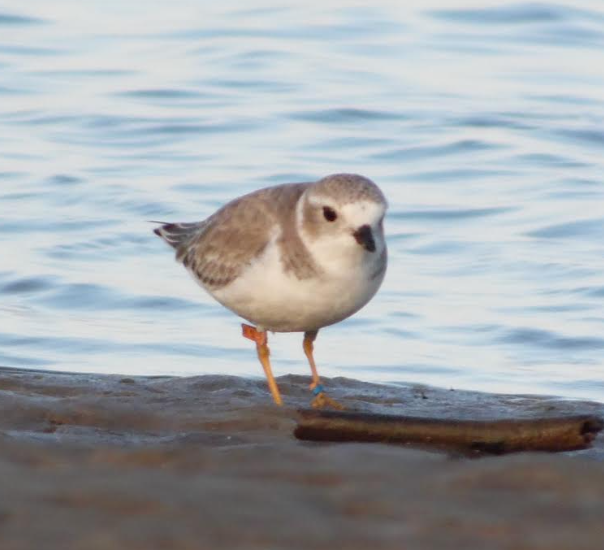
The shorebird team was very fortunate to resight multiple banded birds during the Global Shorebird Counts, including royal tern (Thalasseus maximus) YC5, and two piping plovers (Charadrius melodus) KPN and H5. Researchers at Virginia Tech University banded YC5 in Georgia in summer 2019, and the royal tern has been seen on Sanibel since.
“We were thrilled to see YC5 alive and well,” says SCCF Shorebird Technician Samantha Hinsz. “We first observed it in breeding plumage in May 2023, and it continues to return to us in the non-breeding seasons.”
The shorebird team was delighted to see piping plover H5, also known as “Pepper.” Pepper (pictured right) was hatched and reared at Michigan Biological Station and released at Illinois Beach State Park in July 2023. He winters in Florida and has become a well-known figure on our beaches.
“Reporting banded birds can inform conservationists on movement patterns, survival rates, and population status, among other insights,” Albrecht says. “And, with around 50% of the world’s shorebird species in decline, these reports are critical.”
SCCF works every day to safeguard shorebirds, and asks that you please remember to always observe shorebirds from a distance and follow these guidelines. “This is especially important during this time of fall migration, when many birds are resting and recovering from their long journeys,” she adds.
Throughout the year, up to 45 shorebird species can be seen at some point on Sanibel and Captiva. Improve your shorebird identification skills with the webinar featuring SCCF Shorebird Biologist Audrey Albrecht HERE.