
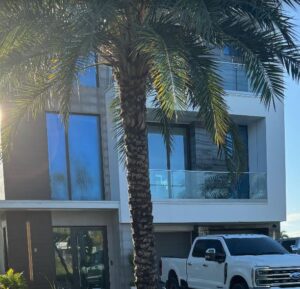
The smell of natural gas coming from 433 Palermo worried neighbor Stephen Sexton enough to go over to the home and call out for his neighbor Mike Dewitt. Sexton hadn’t seen Dewitt for over 24 hours and the smell had him concerned.
On Saturday night at about 10PM, with growing concern about his neighbor, noticing the front door was unlocked, Sexton went into 433 Palermo and started calling out for Dewitt. When he found one person who he knew was no longer alive, he exited the house and called 911.
Lee County EMS and Fort Myers Beach Fire and Rescue responded to the home with hazmat equipment. The owner of the home Mike Dewitt was found by firefighters on the third floor of the house in the shower. A friend of the family, Jack Faler, was found on the first floor in a bedroom in a bed. Faler was a friend of Mike Dewitt’s son and had been working for Dewitt, according to friends we spoke to. All rescue units confirmed a natural gas leak was coming from inside the home.
To be clear there has not been an official determination that the gas leak caused the deaths. The LCSO report released yesterday does not state that and still considers this an active investigation.
Fort Myers Beach Fire and Rescue called in TECO Gas to the scene to locate the gas leak source. TECO Gas utility coordinator Jeremiah Johnson determined a disconnected pool pump exhaust, which led to the second story outdoor pool, was the gas leak source. We reached out to TECO to try to confirm if Johnson meant pool heater and not pool pump. Pool pumps are not powered by gas. TECO would only say “we cannot comment on the report.”
The TECO website states that in its natural state, natural gas is both colorless and odorless. “As a safety precaution, TECO adds an odorant to natural gas to give it a “rotten egg” odor that helps alert people to the presence of natural gas. This unpleasant odor of natural gas is for your protection in the event of a leak. Natural gas may pose a hazard, especially if released in confined spaces. It’s important to be able to identify signs of a natural gas leak, especially the rotten egg-like odor that we add so that you can smell natural gas. You can recognize a natural gas leak in several other ways, including an unusual hissing noise, blowing dirt for no apparent reason, an unusual dry spot in the ground or dead vegetation for no apparent reason, a white cloud, mist, fog or bubbles in standing water, and frozen ground in warm weather.’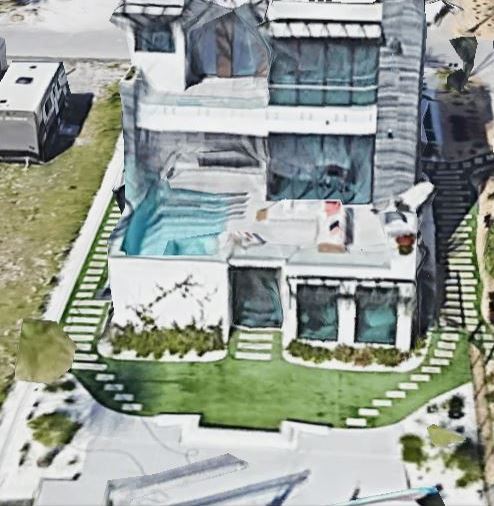
After the deaths at 433 Palermo, the questions that are being asked now: Did the gas leak cause the deaths of Dewitt and Faler? Was a gas-powered pool heater in an enclosed structure attached or inside the house? If so, who installed the equipment that way? How did the equipment get disconnected? How did the gas from the pool equipment get into the home?
Contractors we spoke to on Monday tell us it’s not typical to have a gas pool heater inside an enclosed space. According to the Town of Fort Myers Beach, pool equipment could be allowed inside a structure but would need to include proper ventilation and also permitted. The town confirmed a permit was never issued for this home to place any pool equipment inside any structure.
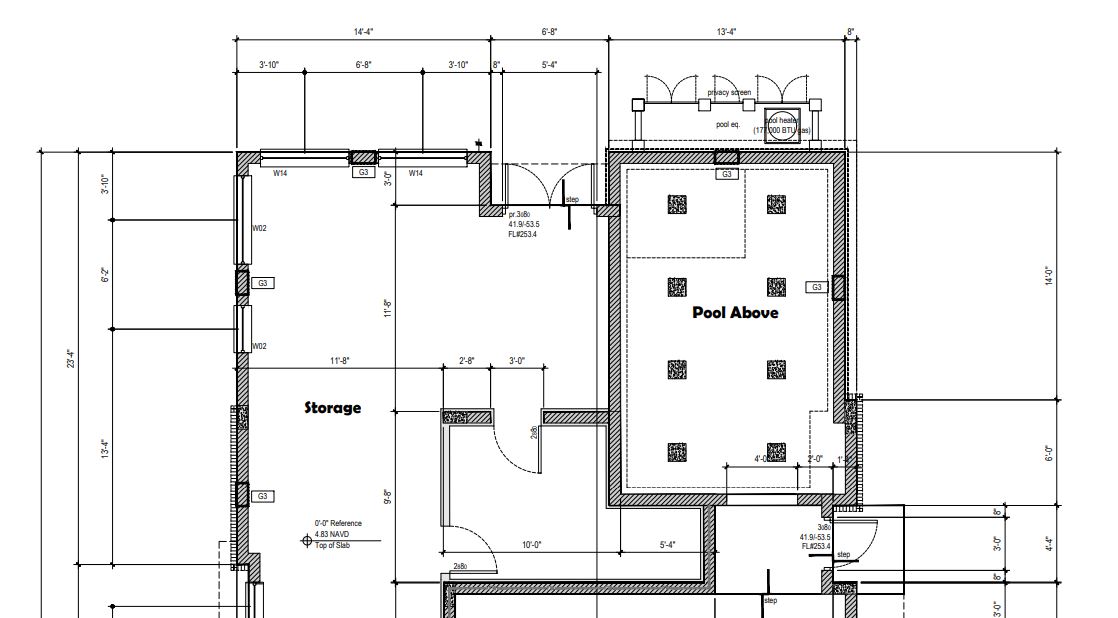
The pool at 433 Palermo is elevated, it’s on the second floor. This layout from the 2020 permit drawings for the pool equipment and heater shows it as being gas and in a screened off area.
 433 Palermo received a Certificate of Occupancy from the Town of Fort Myers Beach on October 11, 2022. The contractor for the home was Joe Orlandini. Steve Brockman is listed as the 3rd party private inspector and engineer on the house, according to town of Fort Myers Beach documents.
Dewitt, from Indiana, owned several properties on Fort Myers Beach and was also building the multi-million home on Glock Drive in Fort Myers.
Dependable, Accurate, Investigative Journalism take time. To support our work, become a BTR Monthly Member HERE.
Comments are closed.