
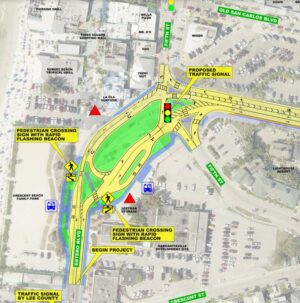
According to the Florida Department of Transportation the 18 month $8 million road reconstruction project that starts at the base of the bridge and extends to the Prescott Street traffic light begins Monday, August 5th.
FDOT Project Administrator Edgar Gonzalez says for that first week workers will be spread out through the project limits doing Maintenance of Traffic and erosion control. He says on August 12th they will begin the on the Matanzas Pass Bridge and will begin demo and restoration of the islands on the beach side.
FDOT says the project will relieve congestion in the area between the alternating lights at Prescott/Buttonwood and the Crescent Street light under the Margaritaville walkover. The total length of the project is about 1 mile.
On the Hurricane Bay Bridge, bicycle lanes will be added in both directions and the bridge will be resurfaced. A 5-foot sidewalk will also be added with a barrier wall.
The light at Prescott and Buttonwood will stay alternating during season. It will function as a regular light when traffic is slower, during the off-season.
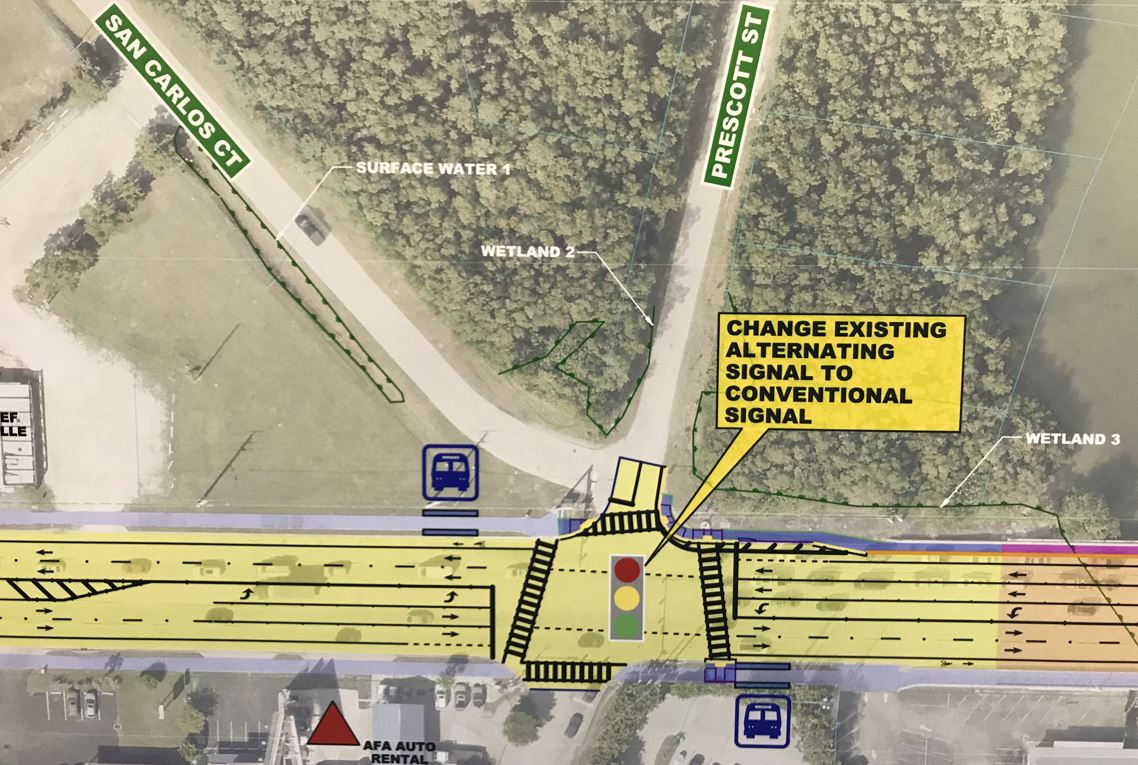 From the Hurricane Bay Bridge to Main Street, FDOT will be resurfacing and re-striping to incorporate bicycle lanes in each direction. The speed limit will be changed from 45MPH to 40MPH.
Once you get to the base of the bridge and head toward the beach, the curb that bottlenecks the second lane will be removed so two lanes of traffic can continue onto the bridge.
A new traffic signal will be added at the base of the bridge at Main Street and San Carlos. A new bus bay will be added to the southbound approach to the bridge.
On the bridge, during peak season the lane configurations will not change, to allow for public transportation and emergency vehicles. During the off-season drivers will be allowed to use both lanes heading onto the beach. Currently there is one lane going in both directions.
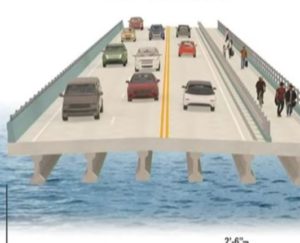
On the Matanzas Pass Bridge the current sidewalk will be widened 5 feet to 8 feet to accommodate pedestrians and bicycles. Currently you’re not permitted to ride your bike in the walking area on the bridge, you must get off and walk your bike over. When the change is made you’ll be allowed to bike on that walkway. There will not be a specific bike lane so bikers and walkers will still need to watch out for one another.
The base of the bridge on the beach side will be totally reconstructed. A new traffic signal will new installed at 5th street. With the additional 2 traffic lights, FDOT says they will all communicate with each other and better be able to flow traffic on and off the island. At the end of the day, once you get onto Fort Myers Beach there is still one lane going in both directions.
There will be an abundance of crosswalks at the base of the bridge on the beach side. That topic has been very controversial with the Fort Myers Beach Town Council and residents who’ve for years experienced drivers stopping and pedestrians darting across the street wherever they can. FDOT says Lee County and Margaritaville have worked out an agreement for landscaping which FDOT says will prevent pedestrians from crossing will-nilly. FDOT says the landscaping will steer the pedestrians to clearly marked crosswalks, where the drivers expect them to be. Margaritaville will maintain the landscaping. There will also be a pedestrian crossing close to Crescent Beach Park.
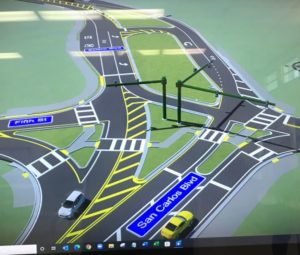
The empty lot in front of Margaritaville, which was donated by TPI to Lee County, is also part of this project. That area will be turned into a wider road that connects with the current roadway to help flow traffic onto the bridge and off the island. Lee County and FDOT are partnering on that portion of the project. The state owns the bridge and the roadway off the bridge. Lee County owns Estero Boulevard.
The project started in design back in 2019. The original plan was to have the project begin in 2023 and be done by the end of 2024. That plan was delayed with a targeted start date of April 2024 and then it was pushed back again to August due to a supply shortage.
The estimated cost for the project is $8 million. All the money is coming from the federal government.
Dependable, Accurate, Investigative Journalism take time. To support our work, become a BTR Monthly Member HERE.
Comments are closed.