
Thinking About Installing Flood Panels? Don’t.

22
164

If you thought installing the type of flood plain panels you see in this picture, to protect your home from the next hurricane would be smart, you’d be wrong. In fact the 5 or 6 homes on the island that have installed them need to remove them.

With an always changing rule-book, FEMA has told the town these very expensive products homeowners are beginning to install on their homes are not allowed. The reasoning is that they can trap the water inside the homes if a storm surge enters the structure. Once installed, the structure is legally considered unsafe for occupancy.

If a company pitching you these products tells you they can be installed without a permit they are misleading you.

Flood plain regulations require new builds to allow water to flow through the structures, not trap it in. The town has also been told that attaching these panels is a ‘building alteration.’ In some cases, limited protection may be possible but not for your entire lower level.

It’s important not to confuse these panels with your typical hurricane shutters, which are legal. The shutters are designed to protect homes from the wind. These panels were invented and sold to residents to stop the water. The majority of damage from Hurricane Ian was due to storm sturge.
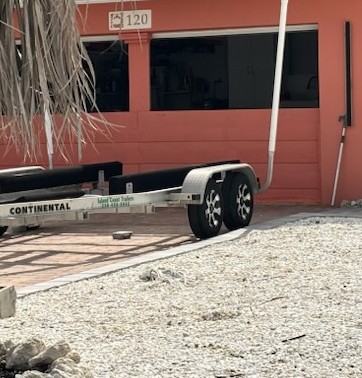
As of today about 5-6 homes have installed these panels and they’ve received, or will receive, code violations.

This applies to residential homes only and it’s the entire island. Condo buildings appear to be in a gray area so you should call the town first before installing these panels on your condo building.

The Town Council is working on a messaging campaign to get out to residents.

Local journalism is hard work. If you appreciate the most in-depth reporting on Fort Myers Beach, please support what we do HERE by Venmo, Zell or PayPal. Thank you.

22 COMMENTS

  1. Did anyone get their 25% off flood insurance from FEMA yet? I dont think they should be ruling around here if their not going to play fare.

  2. I don’t believe there is any one cure all for preventing the damage that occurred here. In my own house and many others I’ve looked at there has been such a wide variety of damage that it would be impossible to foresee and write comprehensive ordinance to be lawfully useful. The idea of letting damaging levels of surge flow through a structure is good. The same goes for air pressure to be released.
    Here on the beach I’ve seen walls kicked out and some entire houses lifted and floated away. There are 2 streets leading into my neighborhood and both were blocked by houses floated in from a block away. One 3 story house mid- island had a hole in the seaward side of the roof you could drive a VW through. My dad’s old place on Randy Lane had the walls and roof intact, but the living room floor was heaved up 18 inches. The water flowed through my ground floor thanks to original break-away walls, but air pressure damaged some ceilings and blew out my roof hatch 35 feet above grade. No one fix could cover all these events.
    The reality is that regulations should be adequately tailored to all the foreseeable variables. People writing regulations and detailed stipulations need more training before putting people and their property at risk. If FEMA and local authorities can’t modify their approach, then they will have to expect a great deal more dissent and lawsuits. They will have to expect to bend to the many unique cases.

  3. Get off Ed’s ass! He is only reporting on what the Town’s building officials stated at the M&P meeting on Thursday. This is not Ed’s interpretation of the FEMA codes, it is the Town’s.

  4. This reporting is incorrect. FEMA guidelines specifically permit flood panels, including on residential structures. Their IS279.A guidelines address this head on. Beach Radio is wrong. Likewise ASCE 24-14, the guiding principal for Florida building code also permits retrofitting residential structures under specific circumstances. Additionally, the Florida Department of Emergency Management just released in January their guidance on retrofitting existing residential buildings and homes. Commercial protection has always and still is permitted but residential has certain restrictions specified in this recently released FDEM guidance. St. Pete Beach may not be fully up to speed yet. Like anything in life, the answer to if these are allowed is “it depends” on the situation, location, height, structure, etc. There are lots of snake oil salespeople selling unsafe Chinese knock of products with no engineering and no testing and that is the bigger story here. This reporting doesn’t help homeowners and unecessarily confuses the situation. The code is complex as is FEMA, FDEM, and ASCE guidance and this article doesn’t even address the actual written guidelines.

  5. Its a good idea if the surge is 1 to 3 feet and it keeps the water and mud out during the surge which won’t last more than couple of hours or a day. The panels could be removed when the danger passes and stored ready for the next storm. The city or governing authority has nothing to say if the panels are removed promptly in a timely matter. For homes built on slabs you may only need 1 for each door and one or 2 for the garage door(s), the windows are high enough and shutters can protect them. They should be made lightweight enough and easy to quickly install and remove and structurally strong enough resist the anticipated water-surge pressure.

  6. Floodplain regulations, specifically the requirement for flood openings (or “flow-through” design) in foundation walls, are intended to equalize hydrostatic pressure on both sides of a structure, preventing it from collapsing due to the force of standing or slowly moving water. These regulations protect the structural integrity of the home itself while reducing the risk of debris.
    Key Reasons for “Flow-Through” Regulations:
    Preventing Structural Collapse: Without openings, water pressure builds up on one side of a foundation wall, while the other remains dry. This unbalanced pressure can cause walls to buckle or collapse.
    Balancing Hydrostatic Loads: Openings allow floodwaters to enter and exit, equalizing the water level (and therefore the pressure) inside and outside the enclosed area.
    Mitigating Property Damage: Allowing water to flow through (often in uninhabited crawlspaces or garages) prevents the structure from acting as a dam, which could force the water to find a more destructive path, potentially increasing damage to the home or nearby properties.
    Meeting FEMA Requirements: These regulations are a key component of National Flood Insurance Program (NFIP) standards, which require that enclosed areas below the base flood elevation in A-zones be designed for automatic entry and exit of floodwater.
    In addition to these structural requirements, modern design in floodplains may also involve elevating structures on piles or columns to allow water to pass beneath the home entirely, especially in coastal high-hazard areas.

  7. This article is flawed and absurd. It’s almost as if the writer has a personal vendetta against flood panels and people taking measures to do what the city cant do, protect their homes! The article suggests that if water makes it’s way in to a home, it will get trapped. It fails to mention that the entire premise of the flood panels is to stop the water getting in! Homeowners install these things, generally because they don’t want the headache of their homes getting destroyed, AGAIN! They don’t want to deal with cleanup, arguing with an insurance company, contractors, sub-contractors, finding somewhere else to live while their home gets remodeled. I hope the person that wrote this article has their facts aligned, because when people rely on mis-information, it might not end well for beacktalkradionews. Flood panels are not a solution for everyone, but in most cases, they are worth every penny!

    • Don’t kill the messenger! Beach Talk Radio is only reporting FEMA’s policy and therefore what rules the city of FBM is bound by. I appreciate that they are getting the word out.

  8. Hmmm, the city issued a permit with complete discription, architect drawings and specifications for the panels. They then inspected the project and the installation and approved signing off on everything.
    So now we are going to be issued a code violation and not allowed to use them? Is the city going to reimburse us for the flood gates, or are they ready to spend a small fortune in attorney fees for giving us false information by issuing a permit, approving the project and basicly giving their blessings to install and use them for flood protection.

  9. Government overreach for sure. Agree with another reply, saying that ppl install the barriers on their way out….. so the space is not occupied by anyone.
    In other areas of the country, entire towns use temporary flood barriers for occasional flood protection …… Frankenmuth MI is one of them. Are these entire towns inhabitable while the barriers are installed??

  10. I installed “self made” flood barriers using Hardiboard and Flood seal tape before Milton . My home had 18″ outside my front door, and the barriers kept my inside almost dry.. did’nt work perfect, only got 1-2″ inside but I didn’t lose my appliances or furniture. All my neighbors lost everything inside. BS what FEMA says.

  11. Hmmm. All the homes in Hawaii were completely destroyed. Did they let them rebuild? All the homes in the Palisades were completely destroyed. Did they let them rebuild? North Carolina? Seems like a pattern of needing a complete wipeout before the land grab can take place, so you don’t let folks protect their homes.

  12. This is more nonsense from FEMA. I have relatives up north who are in the insurance industry and they have told me that the game is: charge as much as possible and payout as little as possible. This is just more of the same strategy.
    The requirement should be to purchase these barriers from state-certified reputable companies, not from companies that are new to the game.

  13. How does this apply if you only install them, when you’re leaving? It kind of defeats the concept that your trapping someone.

  14. Next we will have to leave all the windows open during a hurricane. After all stagnant air will promote mold. What’s next? These panels are to mitigate damage, what’s Fema’s alternative? Build 30 feet up? We need economical solutions not kicked when you are down.

  15. Permits HAVE been issued for the installation of the flood gates – the 1st picture is one. I thought Albert commented when they can be used for residential.

  16. Again More Government Overreach!!! Why should FEMA care how people protect their homes!! As far as I am concerned it’s my property and I do with it what I think is right!!!!

  17. There are a lot more than 5 or 6. At least five on my block alone and Fairview isles has several. If the panels are 5′ high and the water goes over that , who really cares if it holds the water, you are already destroyed. The panels are for a 2 or 3 foot flood event and if they do work and the water doesnt enter another way(plumbing or between the slab and wall) then you are golden.

    • Exactly. Last two hurricanes were 2 to 3 ft surge.if you had these panels. You didn’t get any damage. Yes another Ian say 18 ft.will go over eEa 5 ft panel.But so what you loose everything either way.FEMA not looking at the whole picture because they don’t I’ve here. 3ft of water floods lobbies of condos.Causing thousands of dollars in damage. No water gets in.no damage.

  18. Ed, I call BS on this. People trying to protect themselves and prevent losses. I noticed the Whale has them also and they should. How does that work? Time to get this regulation changed. People should be able to protect their property at their cost however they see fit.

LEAVE A REPLY

Please enter your comment!
Please enter your name here